If global gastronomy has its diamonds, Wagyu beef is undoubtedly its most precious specimen. Renowned as the most expensive, tender, and flavorful meat in the world, it inspires as much fascination as it does questions. But what truly differentiates a Wagyu steak from a standard piece of beef? Is it a matter of breed, upbringing, or genetics?
In this comprehensive guide, we will explore the origins, production secrets, and unique characteristics of this exceptional meat. Whether you are a Michelin-starred chef or a connoisseur of gourmet pleasures, discover why Wagyu has become the ultimate standard of culinary luxury—and how Froggy Gourmet provides you with access to this extraordinary sensory experience.
1. Definition and etymology: what does "wagyu" mean?
The word Wagyu (和牛) is a combination of two Japanese kanji:
- "Wa" (和): meaning Japanese or relating to Japan.
- "Gyu" (牛): meaning cow or cattle.
Literally, Wagyu simply means "Japanese cattle." However, this designation is extremely strictly protected and regulated. Unlike Western cattle breeds historically selected for milk production or pulling power, Wagyu benefited from geographical isolation and genetic selection focused on physical endurance.
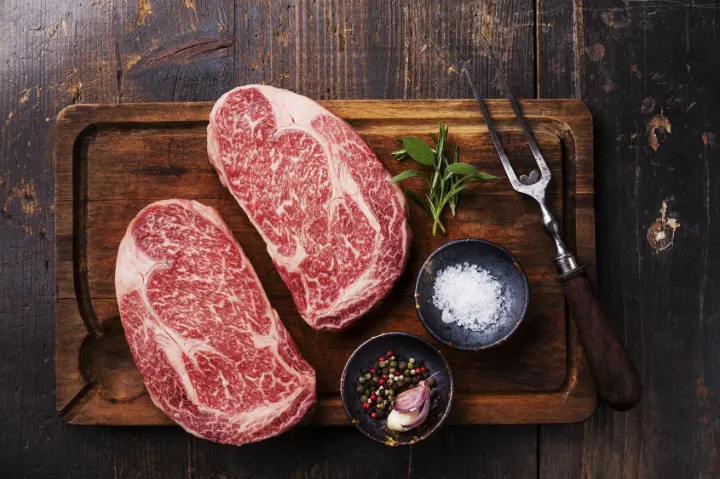
This endurance favored the development of a unique trait: the animal's ability to store fat inside the muscle rather than around it, creating what is known as marbling.
2. The 4 authentic wagyu breeds
It is crucial to understand that "Wagyu" is not a single breed, but a group of four indigenous Japanese cattle breeds:
- Japanese Black (Kuroge Washu): This is the most common breed (about 90% of production). It produces the most intense and finest marbling.
- Japanese Brown (Akage Washu): Also known as Red Wagyu, this breed produces leaner meat with a more pronounced beefy flavor but still maintains a very tender texture.
- Japanese Shorthorn (Nihon Tankaku Washu): Raised mainly in northern Japan, it offers meat rich in amino acids, enhancing the "umami" taste.
- Japanese Polled (Mukaku Washu): The rarest breed, known for its classic beef flavor and rich texture.
For discerning gourmets, the Japanese Black (Kuroge Washu) is typically the most sought-after for its "beef butter" texture.
3. The secret of marbling (Sashi): The DNA of Wagyu
The hallmark of Wagyu is intramuscular marbling, called Sashi in Japan. Unlike the thick white fat found on the edge of a standard sirloin, Wagyu marbling appears as delicate lace-like patterns of fat distributed evenly within the muscle fibers.
Why is this fat different?
Wagyu fat has an extremely low melting point (approximately 25°C to 28°C or 77°F to 82°F). This means it begins to melt as soon as it touches the human tongue.
From a nutritional standpoint, Wagyu is exceptional: it is rich in monounsaturated fatty acids (Omega-3 and Omega-6), such as oleic acid found in olive oil. This "good fat" is not only better for cholesterol levels but is also responsible for Wagyu’s unique aroma, often described as having notes of coconut, peach, or roasted hazelnuts.
4. Wagyu vs. Kobe Beef: what’s the difference?
This is the most frequently asked question. Here is the short answer: All Kobe beef is Wagyu, but not all Wagyu beef is Kobe.
"Kobe Beef" is an extremely rigorous Appellation d'Origine Contrôlée (AOC). To be certified as "Kobe," a bovine must:
- Exclusively belong to the Tajima lineage (a sub-family of the Japanese Black breed).
- Be born, raised, and slaughtered in the Hyogo prefecture (of which Kobe is the capital).
- Present a marbling score (BMS) of 6 or higher on a scale of 12.
- Meet strict weight and genetic purity criteria.
Wagyu encompasses other prestigious appellations such as Matsusaka, Yonezawa, or Kagoshima beef, which often rival Kobe in quality.
5. The Japanese grading system: understanding A5
When searching for the best Wagyu meat, you will often see the term "A5." This grade is the pinnacle of the Japanese hierarchy, awarded by the Japan Meat Grading Association.
The Yield Grade (A, B, or C)
The letter corresponds to the meat yield of the animal. "A" is the highest grade, signifying superior yield.
The Quality Grade (1 to 5)
The number evaluates four criteria:
- Marbling (BMS - Beef Marbling Score).
- Meat color and brightness.
- Firmness and texture.
- Color and quality of the fat.
An A5 grade means the meat has achieved the maximum score in every category. For a connoisseur, the BMS (Beef Marbling Score) is the most important indicator: it ranges from 1 to 12. An A5 Wagyu typically has a BMS between 8 and 12.
6. The art of husbandry: why is wagyu so expensive?
The high price of Wagyu is explained by a rearing cycle two to three times longer than that of industrial cattle. While a standard steer is slaughtered at around 15–18 months, a Wagyu steer is carefully raised for 30 to 35 months.
A stress-free environment
Japanese breeders believe that stress is the enemy of marbling. The animals live in calm environments with access to pure water and a controlled diet based on rice straw, grains, and corn.
Note: While legend says the cows are massaged and drink beer, this remains a rare and non-systematic practice, sometimes used to stimulate the animal's appetite or prevent cramps in small pens.
Each steer has a birth certificate with its nose prints and a genealogical lineage tracing back several generations, ensuring total traceability.
7. How to cook and taste wagyu beef
Cooking A5 Wagyu is a responsibility. Due to its richness, it is not consumed like a traditional 300-gram steak. It is enjoyed in small portions, often 50 to 100 grams.
- Room Temperature: Take the meat out of the refrigerator at least 30 minutes before cooking.
- No Extra Fat: Wagyu will release its own oil as soon as it touches the pan.
- Quick Sear: A "Rare" or "Medium-Rare" cook is recommended. The fat must be melted, but the meat should not be overcooked.
- Minimal Seasoning: A pinch of sea salt (Fleur de sel) and perhaps a turn of the pepper mill are enough to enhance the Umami.
8. Where to buy authentic wagyu? the excellence of Froggy Gourmet
For a meat of such rarity, the choice of supplier is crucial. Unfortunately, the global market is flooded with "crossbred Wagyu" (Australian or American) which, while good quality, never reaches the depth of flavor and texture of purebred Japanese Wagyu.
This is where FroggyGourmet comes in.
The Partner for Chefs and Discerning Gourmets
A specialist in the distribution of luxury food products, Froggy Gourmet has established itself as the reference for sourcing exceptional products. Whether you are a yacht chef on the French Riviera, a private villa steward, or a gastronomy enthusiast, Froggy Gourmet selects the finest cuts of certified Japanese Wagyu for you.
Why choose Froggy Gourmet for your wagyu?
- Rigorous Sourcing: Only pieces with impeccable traceability and high marbling grades (A4, A5) enter their catalog.
- Bespoke Service: Froggy Gourmet understands the requirements of the high-end gastronomy and yachting worlds, offering flawless logistics to guarantee the absolute freshness of the product.
- Culinary Expertise: Beyond simple sales, they assist their clients in choosing the right cuts (Fillet, Sirloin, Ribeye) according to the intended use.
By choosing froggygourmet.fr, you are guaranteed to serve the authentic heritage of Japan at your table—meat that literally melts in your mouth and transforms every meal into a historic moment.
An experience to live at least once
Wagyu beef is not just food; it is a testament to human craftsmanship and the patience of nature. Its unique marbling, silky texture, and complex aromas make it an exceptional product that redefines the limits of taste.
If you wish to discover this gastronomic treasure, trust the expertise of Froggy Gourmet. By visiting froggygourmet, you access a selection of exceptional products, sourced with passion to satisfy the most refined palates on the planet.
Don’t wait any longer to taste excellence. Rediscover beef; discover Wagyu.
9. Frequently asked questions (FAQ)
Is Wagyu beef healthy?
Yes, when consumed in moderation. It contains a higher concentration of monounsaturated fatty acids ("good" fats) than any other breed of cattle.
What is the difference between A4 and A5 Wagyu?
A5 grade features denser marbling (BMS 8-12) and a creamier texture. A4 is slightly less fatty, which sometimes allows the meat's actual beef flavor to shine through more clearly.
Why is Japanese Wagyu superior to Australian Wagyu?
Japanese Wagyu comes from 100% pure bloodlines (Fullblood) and benefits from a longer rearing period and much stricter government regulations than foreign farms.
What is the price of Wagyu beef per kilo?
The price varies by grade and cut, but authentic Japanese A5 Wagyu typically ranges between €250 and €600 per kilo, reflecting its rarity and production costs.