In the world of superyacht gastronomy, "Kosher" is often treated as a single checkbox. However, for a professional chef, treating it as a binary (Yes/No) is a risk.
Kashrut (Jewish dietary law) is a complex system with various levels of adherence. A guest who observes "Standard Kosher" has very different requirements than a guest who requires "Mehadrin" certification. For a chef, the difference between these levels isn't just theological—it’s a matter of which specific product you source and which seal of approval you look for on the packaging.
This guide breaks down the essential kosher certification symbols and terminology every yacht chef needs to know to ensure a flawless guest experience.
What is a Hechsher?
At its simplest, a Hechsher is a certification mark—a symbol or a word—placed on a product to indicate that it has been supervised by a qualified Rabbi or a recognized kosher agency.
When you are sourcing ingredients, you aren't just looking for the word "Kosher"; you are looking for the Hechsher. This symbol guarantees that the ingredients, the processing equipment, and the additives all comply with Jewish law.
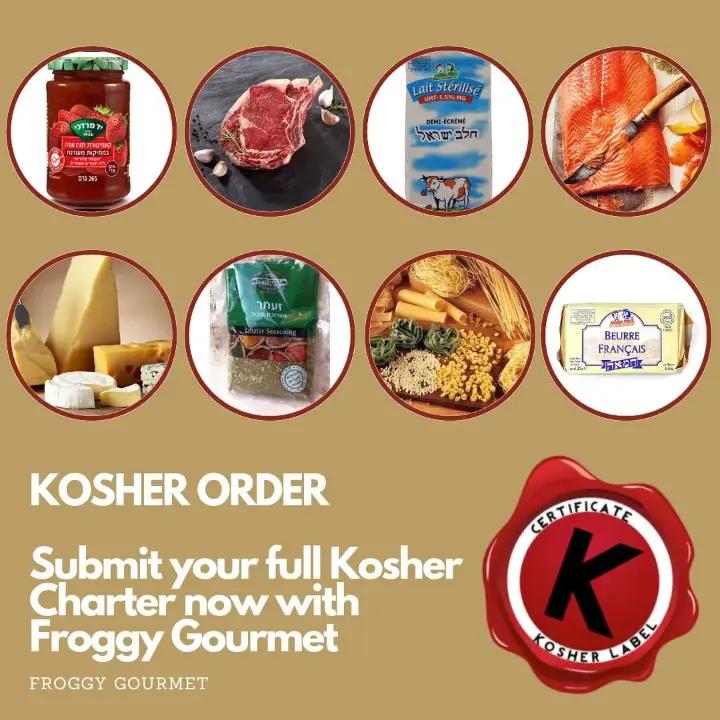
Common Global Kosher Symbols to Recognize
While there are hundreds of local certifications, a few global agencies dominate the luxury market:
- OU (Orthodox Union): One of the most widely recognized symbols in the world.
- OK: Another globally accepted certification.
- Star-K: Highly respected, especially for high-end baked goods and processed items.
- Kof-R: Common in high-quality specialty imports.
If you see these symbols, the product has undergone a rigorous audit. However, depending on your guest's level of observance, some of these may not be "strict" enough.
Understanding the Tiers: Standard, Glatt, and Mehadrin
Not all kosher certifications are created equal. Depending on the guest, you may be asked to provide a specific "grade" of kosher food.
1. Standard Kosher
This is the baseline. It means the food meets the basic requirements of Kashrut. For many guests, any recognized Hechsher is sufficient.
2. Glatt Kosher (The "Smooth" Standard)
The term Glatt (meaning "smooth") refers specifically to the lungs of the animal. In the slaughtering process, if the lungs are smooth and free of adhesions, the meat is "Glatt."
- Why it matters: Glatt Kosher is a higher standard of quality and purity. Most high-net-worth individuals and traditional families insist on Glatt Kosher meat.
3. Mehadrin (The Strictest Standard)
Mehadrin comes from the Hebrew word for "refined" or "enhanced." This is the highest level of certification. It implies a more stringent level of supervision throughout the entire production chain—from the farm to the packaging.
- The Chef’s Takeaway: If a guest requests "Mehadrin," you cannot substitute it with "Standard" or even "Glatt" kosher. You must find a product specifically labeled as Mehadrin.
The Concept of "Parve": The Chef's Secret Weapon
For a yacht chef, the most important term in the kosher vocabulary is Parve (or Pareve).
Parve refers to foods that are neither meat nor dairy. This includes:
- All fresh fruits and vegetables.
- Grains and legumes.
- Eggs.
- Certain fish (with scales).
Why is this a "Secret Weapon"? Because Parve items can be served with either meat or dairy. If you are designing a complex multi-course menu, focusing on Parve appetizers and side dishes gives you the flexibility to switch between a meat-based main course and a dairy-based dessert without violating the laws of separation.
The Risks of "Self-Certified" or "Local" Sourcing
One of the biggest mistakes a crew can make is assuming that a "natural" or "organic" product is automatically kosher, or trusting a local supplier who says, "I know it's kosher, but there is no stamp."
In the luxury yachting world, "trust" is not a certification. Without a verified Hechsher, the food is not considered kosher by observing guests. This can lead to immense embarrassment for the crew and a breach of trust with the guest.
How Froggy Gourmet Eliminates the Guesswork
Navigating the alphabet soup of symbols (OU, OK, Glatt, Mehadrin) is not a chef's primary job—their job is to create art on a plate.
This is why Froggy Gourmet acts as the ultimate filter. We don't just provide kosher yacht provisioning; we provide certification assurance.
When you partner with us, you don't have to spend hours decoding labels. We handle the vetting process:
- Client Profile: We identify the exact level of certification your guest requires (e.g., Glatt or Mehadrin).
- Strict Vetting: We source only from suppliers whose certifications are current and recognized by global rabbinical authorities.
- Verified Delivery: Every product delivered to your galley is pre-checked, ensuring that the Hechsher on the package matches the guest's requirements.
By removing the risk of certification errors, Froggy Gourmet allows the chef to focus on flavor, presentation, and guest satisfaction.
Summary Table for Yacht Chefs
|
Term |
What it means |
Level |
Can it be served with Dairy? |
Can it be served with Meat? |
|
Standard |
Basic Kosher |
Basic |
Yes (if Parve) |
Yes (if Parve) |
|
Glatt |
Higher meat standard |
High |
No (if Meat) |
Yes |
|
Mehadrin |
Strictest supervision |
Elite |
No (if Meat) |
Yes |
|
Parve |
Neutral (Neither) |
N/A |
YES |
YES |
Don't leave your reputation to chance. Whether you are navigating the waters of the Mediterranean or the Caribbean, ensure your supplies are flawless. Visit Froggy Gourmet today to access the world's most reliable network of certified luxury kosher products.